

Technology plays a crucial role in modern education. However, simply adopting new digital tools is not enough. Schools need a structured plan to ensure that technology is used effectively to enhance learning, improve operations, and secure data. The ICT Blueprint provides a clear, step-by-step guide for schools at any level to implement ICT (Information and Communication Technology) systems sustainably and strategically. This blueprint ensures that schools do not just buy new technology but also plan for long-term success.

This article explains the five key pillars of ICT development, how to create an ICT Transition Matrix, and how to track progress using a Progress Report Table.
Step 1: Understanding the School’s ICT Vision
Before making any changes, every school must first analyze its current situation and set clear goals for the future. This step involves answering three critical questions:
-
What is our vision?
Schools must define their overall goal when using ICT. For example, do they want to improve student engagement, make learning more interactive, or improve administrative efficiency? A strong vision will guide all future ICT decisions. -
What is our current ICT system?
Schools must conduct an assessment of their existing technology infrastructure. This includes checking the availability and performance of computers, internet connectivity, software, and staff digital literacy. Identifying strengths and weaknesses helps in making informed decisions. -
What is our future ICT system?
Schools need to imagine their ideal future ICT environment. Do they want to implement smart classrooms, blended learning, or cloud-based learning management systems? Defining this vision helps create a roadmap for the transition.
By answering these questions, schools can determine where they stand today and where they want to go in the future.
Step 2: The Five Pillars of a Strong ICT System
The ICT Blueprint is based on five essential pillars that contribute to an effective ICT system in schools:

-
Applications
Schools need the right software and digital tools to support learning and administration. This includes Learning Management Systems (LMS), student databases, and educational apps that improve teaching quality. Schools must ensure that all applications are user-friendly, secure, and integrated with existing systems. -
Infrastructure
The backbone of any ICT system is its hardware and network infrastructure. This includes reliable internet connections, modern computers, projectors, and networking devices. Without proper infrastructure, even the best educational software will not function effectively. -
Operations
Teachers, students, and staff must be trained to use ICT tools properly. Schools should invest in digital literacy programs to ensure that technology is being used to its full potential. Regular training sessions will help teachers integrate digital tools into their lessons effectively. -
Governance
ICT policies must be clearly defined to ensure smooth operations. Schools should establish rules for data security, online behavior, internet access, and digital content usage. Proper governance prevents misuse of technology and ensures that all stakeholders follow best practices. -
Security
Cybersecurity is a critical part of any ICT system. Schools must protect student and staff data by implementing strong passwords, encryption, firewalls, and data backup systems. With the rise of cyber threats, having a robust security plan is essential to prevent unauthorized access and data loss.
Each of these pillars is essential in creating a well-balanced and effective ICT environment for schools.
Step 3: Developing ICT Initiatives with the Transition Matrix
Once a school has defined its current and future ICT system, the next step is to create a transition plan. This plan is organized using a Transition Matrix, which outlines the goals for each pillar over a specific timeframe.
The transition matrix is a roadmap for implementing ICT changes, typically over 3, 4, or 5 years. Each year focuses on a specific set of improvements that bring the school closer to its ideal ICT environment.
Example of a 3-Year ICT Transition Matrix
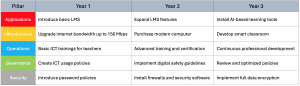
This structured approach ensures that the school progresses step by step, rather than making random, uncoordinated changes.
Step 4: Monitoring Progress with the Progress Report Table
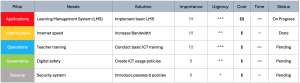
To ensure that the ICT transition plan stays on track, schools need a Progress Report Table. This table helps schools prioritize tasks by evaluating:
- Importance – How critical is the task for the school’s success?
- Urgency – How soon does it need to be completed?
- Time – How long will it take to implement?
- Cost – What is the budget required?
Example of a Progress Report Table
Legend Example
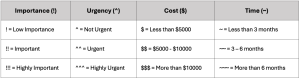
Each school can customize this table to fit its specific needs and priorities.
The ICT Blueprint is a comprehensive framework designed to help schools integrate technology effectively. By following a structured approach, schools can ensure that digital transformation is not just about adopting new tools but about creating a sustainable and well-managed ICT environment. A successful ICT implementation starts with understanding the school’s vision and assessing its current technological state. The five pillars—applications, infrastructure, operations, governance, and security—provide a strong foundation for schools to build upon. Using the transition matrix, schools can create a clear roadmap, setting achievable goals over a three, four, or five-year period. Monitoring progress through the progress report table helps prioritize important tasks, manage costs, and ensure timely execution. By taking these steps, schools can enhance the learning experience, improve operational efficiency, and ensure data security. A well-planned ICT system not only benefits students and teachers but also strengthens the institution as a whole, making it future-ready in an increasingly digital world.
Relevant Publications on ICT Blueprint:
- IT Blueprint and School
- IT Blueprint for Education Institutions
- IT Blueprint Using IT Initiative Implementation in Book Store to Support E-commerce
- IT Initiative for Creative Interactive Teaching Presentation Based on IT Blueprint Framework
- IT Initiative To Support Dynamic and Communicative Teaching Methods to Enhancing The Quality of Teaching Based on IT Blueprint Framework
- Delivering an Interactive Presentation in Support of Dynamic Teaching Method with an IT Blueprint Framework IT Initiative – ITBlueTric
- Cloud-based Mixed Reality System in Machinery Vocational School: ICT Blueprint