

Digital transformation is not simply about adopting new technology. Many organizations invest heavily in digital systems but still fail to achieve meaningful business impact. The reason is often strategic misalignment. Technology alone cannot create competitive advantage unless it supports business goals, operational needs, customer expectations, and long-term value creation.
To make better decisions, businesses need a structured framework that helps managers evaluate how technology supports organizational strategy. A Strategy Decision Tool helps organizations analyze their business model, operational challenges, digital capabilities, and future opportunities before making major transformation decisions.
The following framework explains several important components that organizations should evaluate when designing digital transformation strategies.
4 Levels of IT: Function, Collaboration, Insight, Revenue and Profit Generator
Organizations use technology at different maturity levels. Understanding these levels helps businesses identify how advanced their digital transformation efforts really are.
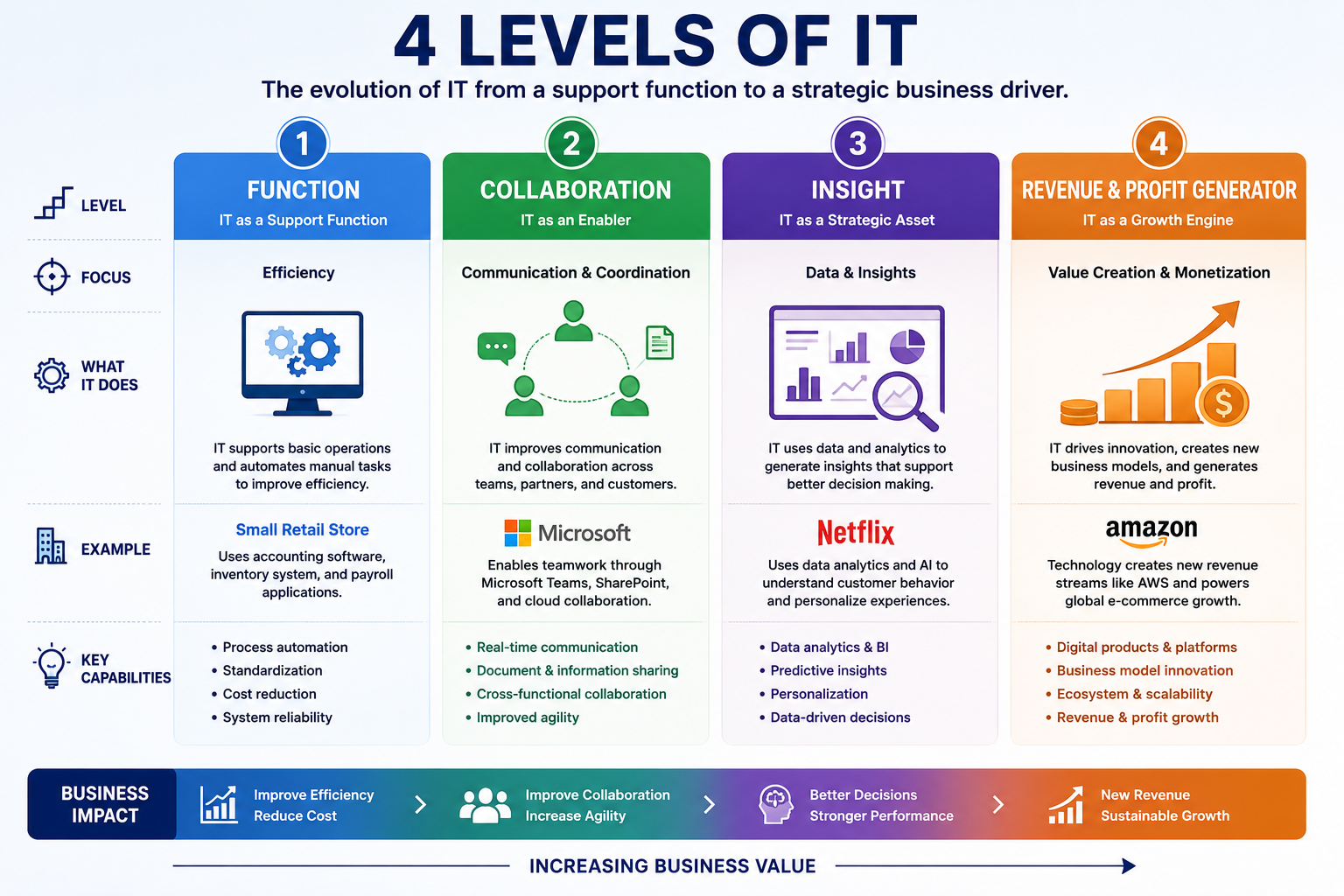
Function Level
At the most basic level, technology supports operational functions and administrative tasks.
For example, a small retail store may use accounting software, inventory systems, and payroll applications mainly to improve efficiency and reduce manual work.
At this stage, IT functions mainly as a support tool rather than a strategic asset.
A real-world example can be seen in many traditional businesses during the early stages of digital adoption. Restaurants that initially adopted digital payment systems mainly focused on operational convenience rather than strategic innovation.
Collaboration Level
At the collaboration level, technology improves communication and coordination across departments, partners, and customers.
A strong example is Microsoft through platforms such as Microsoft Teams and cloud collaboration systems.
During the COVID-19 pandemic, businesses worldwide adopted collaboration technologies to support remote work, virtual meetings, document sharing, and project management.
Organizations that successfully implemented collaboration technologies maintained productivity despite physical workplace restrictions.
At this level, IT begins improving organizational agility and communication efficiency.
Insight Level
At the insight level, organizations use technology and analytics to support strategic decision-making.
A strong example is Netflix.
Netflix continuously analyzes customer behavior, viewing patterns, and engagement data to make business decisions about content production and recommendation systems.
Instead of relying only on intuition, the company uses data-driven insights to reduce uncertainty and improve strategic planning.
Businesses operating at this level treat data as a strategic asset.
Revenue and Profit Generator Level
At the highest level, technology directly creates revenue and competitive advantage.
A strong example is Amazon.
Amazon initially used technology to support online retail operations, but over time its technology infrastructure evolved into entirely new revenue streams such as Amazon Web Services.
Today, AWS generates billions of dollars and has become one of the company’s most profitable business units.
At this stage, technology is no longer only a support system. It becomes a core business driver.
Organizations that reach this level often create entirely new digital products, platforms, or ecosystems.
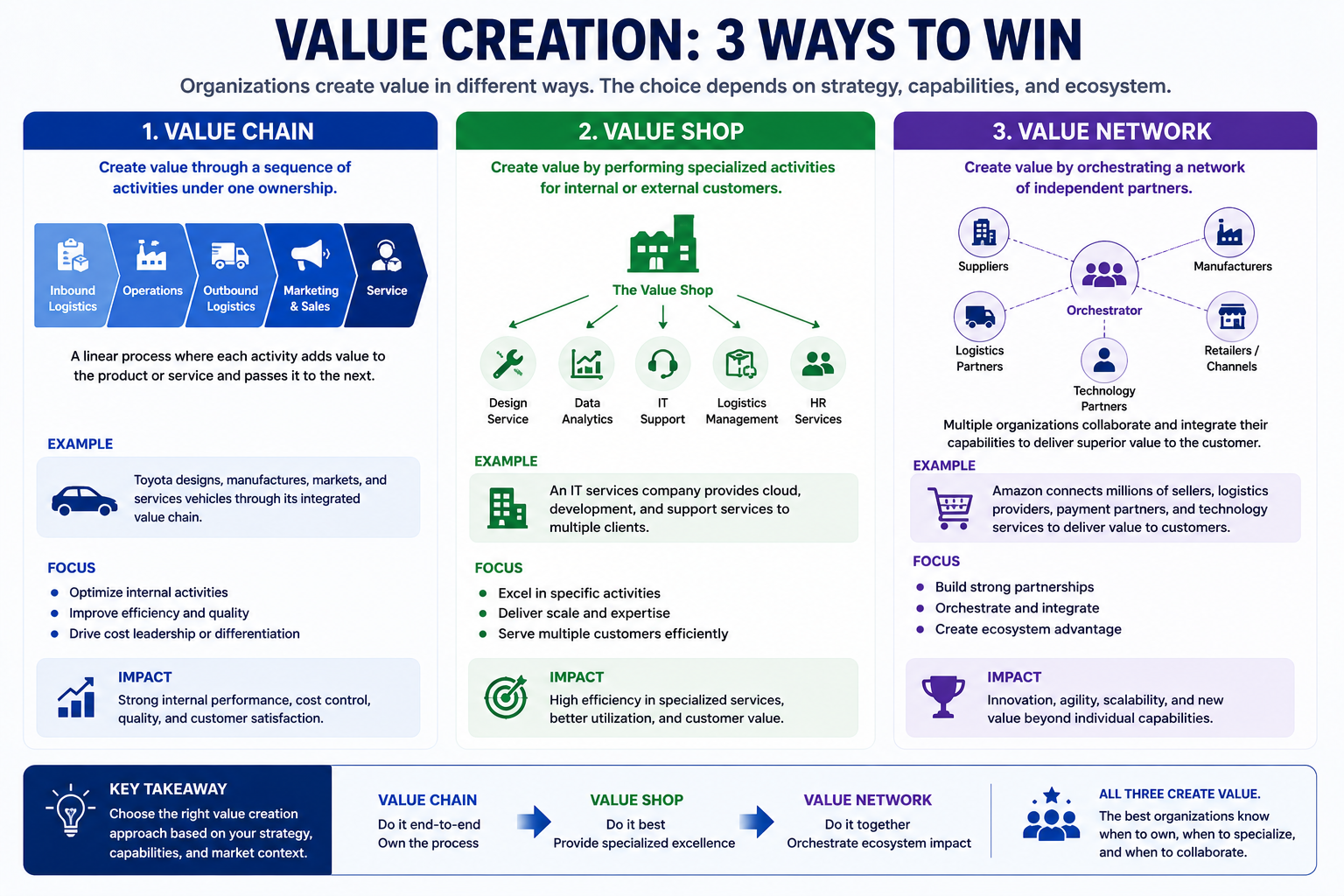
Value Creation: Value Chain, Value Shop, and Value Network
Different businesses create value in different ways. Understanding the organization’s value creation model helps determine the most appropriate digital transformation strategy.
Value Chain
The value chain model focuses on sequential activities that transform raw materials into finished products.
Manufacturing companies commonly use this model.
A strong example is Toyota.
Toyota uses digital technologies such as automation, robotics, IoT sensors, and supply chain analytics to optimize production processes from raw materials to final vehicle assembly.
Digital transformation improves efficiency, quality control, and operational coordination throughout the production chain.
Value Shop
The value shop model focuses on solving customer problems rather than producing standardized products.
Consulting firms, hospitals, and law firms often operate using this model.
For example, hospitals increasingly use AI diagnostics, electronic medical records, and data analytics to improve patient treatment decisions.
A strong example is Mayo Clinic, which integrates digital technologies and analytics into medical research and patient care systems.
In value shop organizations, digital transformation improves expertise, decision quality, and problem-solving capabilities.
Value Network
The value network model creates value by connecting users and facilitating interactions.
A strong example is Grab.
Grab connects drivers, customers, merchants, and payment systems through one digital platform.
The more users participate, the more valuable the platform becomes.
Social media companies, online marketplaces, and financial technology platforms also operate using value network models.
Digital transformation in value networks focuses heavily on scalability, ecosystem growth, and user engagement.
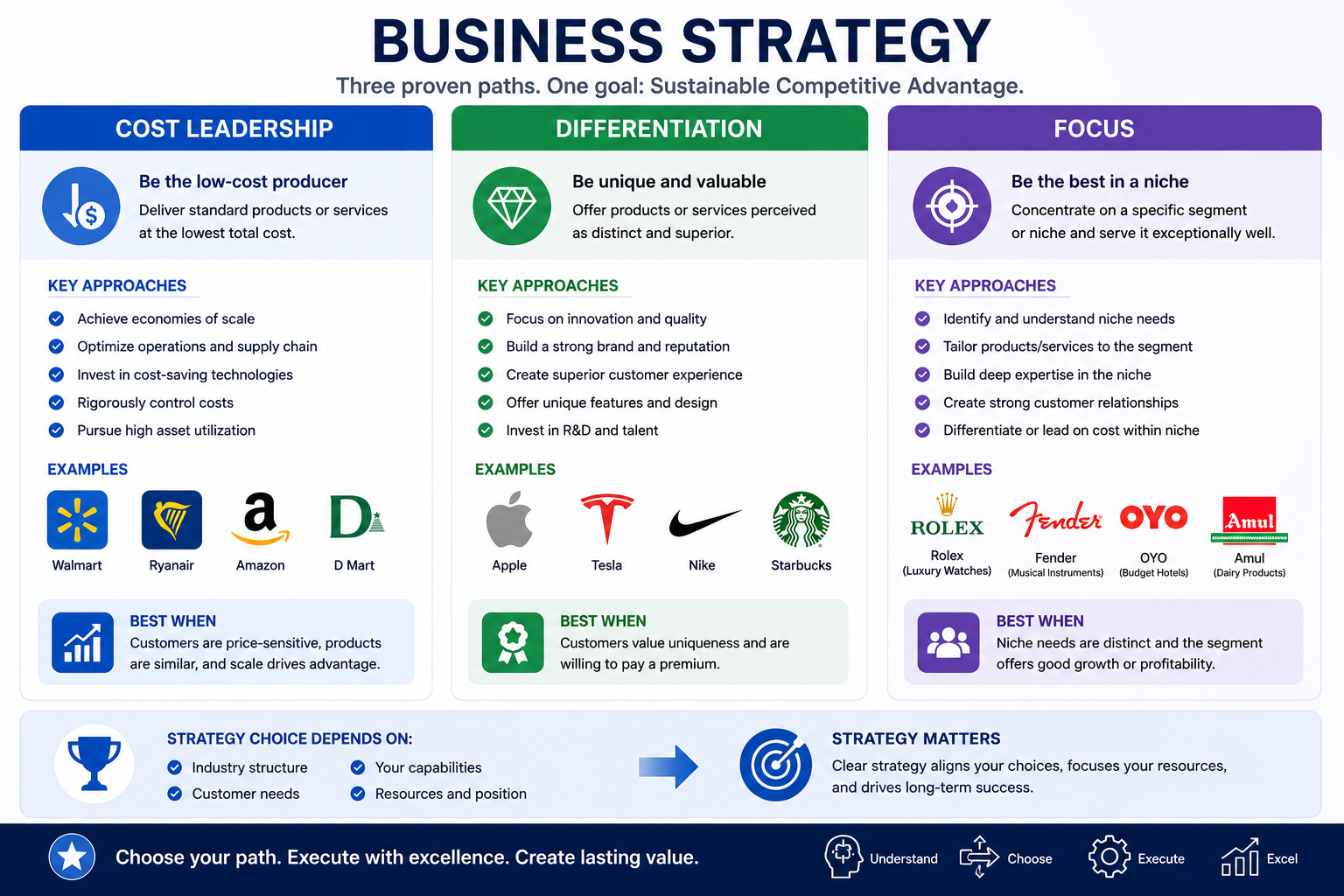
Business Strategy: Cost Leadership, Differentiation, and Focus
Organizations also need to align digital transformation with business strategy.
Cost Leadership Strategy
Businesses using cost leadership aim to become the lowest-cost producers in their industry.
A strong example is Walmart.
Walmart uses automation, supply chain analytics, and inventory management systems to reduce operational costs and maintain competitive pricing.
Digital transformation supports efficiency and operational scale.
Differentiation Strategy
Differentiation focuses on creating unique products, services, or experiences.
A strong example is Apple.
Apple differentiates itself through integrated ecosystems, premium user experience, and product design.
Its digital strategy combines hardware, software, cloud services, and customer experience into one seamless ecosystem.
Focus Strategy
Focus strategy targets specific market segments or niche customers.
A strong example is Tesla during its early growth period.
Tesla initially focused on premium electric vehicles for technology-oriented consumers before expanding into broader markets.
Digital transformation helped Tesla create smart connected vehicles with software-based innovations.
Key Activities and Key Resources
Businesses must identify which activities and resources create the greatest strategic value.
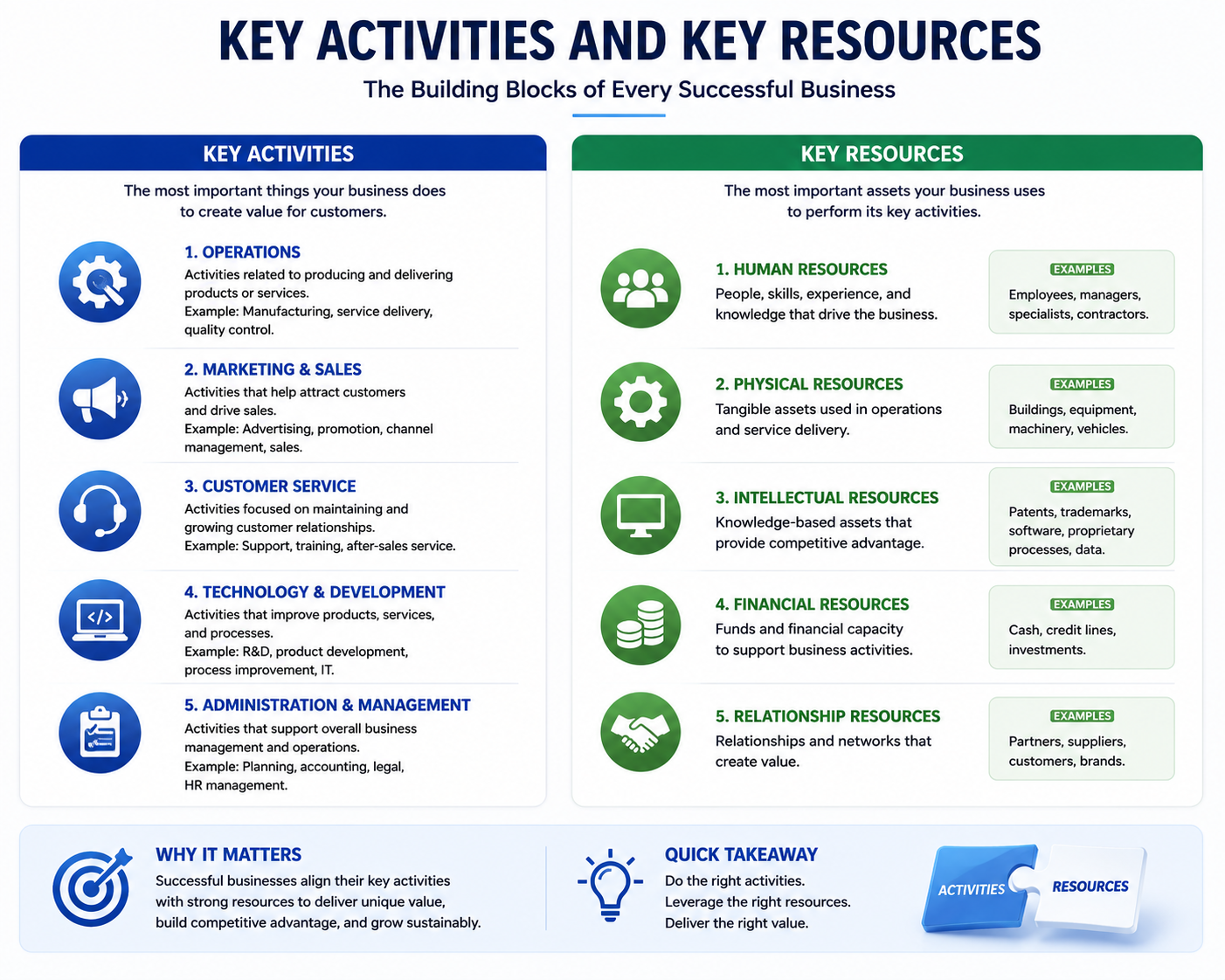
For example:
- e-commerce businesses depend heavily on digital platforms and customer data
- logistics companies depend on routing systems and operational coordination
- streaming companies depend on content and recommendation algorithms
A strong example is Spotify.
Spotify’s key resources include:
- user data
- recommendation algorithms
- cloud infrastructure
- licensing agreements
Its key activities include content delivery, personalization, and user engagement optimization.
Understanding these priorities helps businesses allocate digital investments more effectively.
Operational Constraints: Volume, Velocity, and Variety
Organizations face different operational challenges depending on the nature of their business.
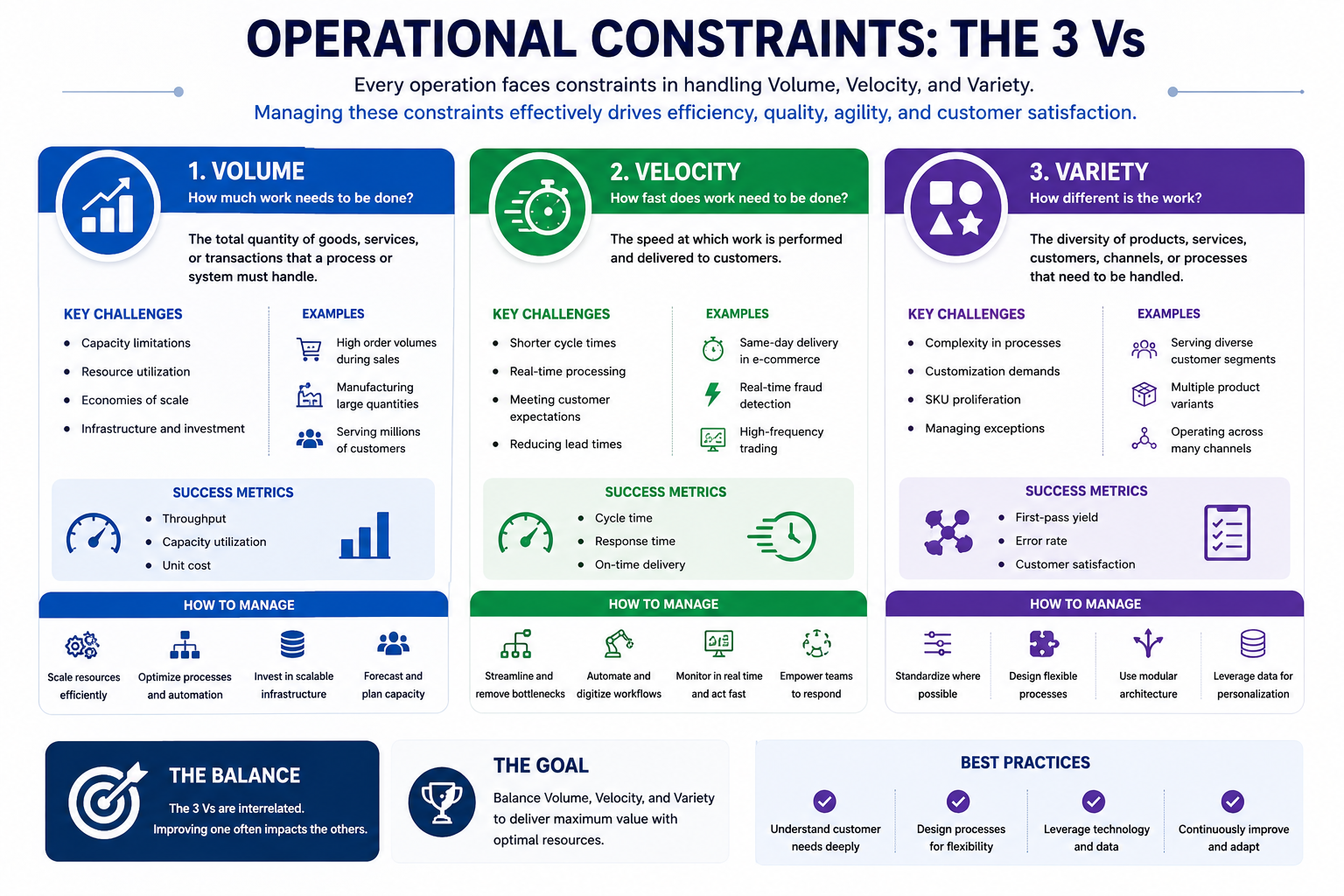
Volume
High volume businesses process massive amounts of transactions or products.
For example, Alibaba manages enormous transaction volumes during shopping festivals such as Singles’ Day.
Automation and cloud infrastructure become critical for handling large scale operations.
Velocity
Velocity refers to operational speed and response time.
A strong example is food delivery platforms such as GoTo.
The platform must process orders, coordinate drivers, and manage payments in real time.
Digital systems must operate quickly and reliably.
Variety
Variety refers to handling diverse products, services, or customer needs.
A strong example is Amazon, which manages millions of products across different categories and markets.
Advanced analytics and AI systems help manage this complexity.
How to Increase Service Components
Modern businesses increasingly combine products with services to create stronger customer relationships.
For example, automotive companies now provide:
- mobile applications
- remote diagnostics
- subscription services
- connected features
A strong example is Tesla.
Tesla vehicles receive software updates remotely, allowing the company to continuously improve customer experience after purchase.
This transforms vehicles from traditional products into ongoing digital service ecosystems.
Future Technology Adoption
Businesses must also evaluate future technology trends to remain competitive.
Technologies such as:
- Artificial Intelligence
- AIoT
- Blockchain
- Cloud Computing
- Quantum Computing
- Automation
- Generative AI
will continue reshaping industries.
A strong example is IBM investing heavily in quantum computing research despite limited short term commercial adoption.
Forward looking organizations often invest early in emerging technologies to prepare for future opportunities.
Focus on Digital Transformation in Business Adoption
Successful digital transformation depends not only on technology, but also on organizational adoption.
Many companies fail because employees resist change or lack digital skills.
A strong example is traditional banks transitioning toward digital banking platforms. Organizations that provided employee training, leadership support, and customer education adapted more successfully than those focusing only on technology implementation.
Digital transformation requires:
- leadership commitment
- employee readiness
- cultural adaptation
- continuous innovation
Technology adoption becomes successful only when people and processes evolve together.
Digital transformation is a strategic journey rather than a simple technology project. Organizations must carefully evaluate business models, operational constraints, customer expectations, and competitive strategies before making digital investments.
The Strategy Decision Tool provides a framework for analyzing how technology supports value creation, operational efficiency, customer experience, and long term growth.
The examples above demonstrate that successful digital transformation requires alignment between technology, business strategy, and organizational capabilities.
Companies that understand this relationship are more likely to create sustainable competitive advantage in the digital economy.