

Digital transformation is changing how businesses operate, compete, and create value for customers. Companies are no longer relying only on traditional business strategies and manual processes. Instead, organizations are integrating digital technologies into customer service, operations, marketing, and business models to remain competitive in a rapidly evolving market.
Today’s consumers expect fast, convenient, and personalized experiences. At the same time, businesses face increasing pressure to improve efficiency, reduce operational costs, and innovate continuously. Digital transformation helps organizations respond to these challenges by combining technology, data, and automation into daily business activities.
Several important trends are shaping digital transformation in modern business environments.
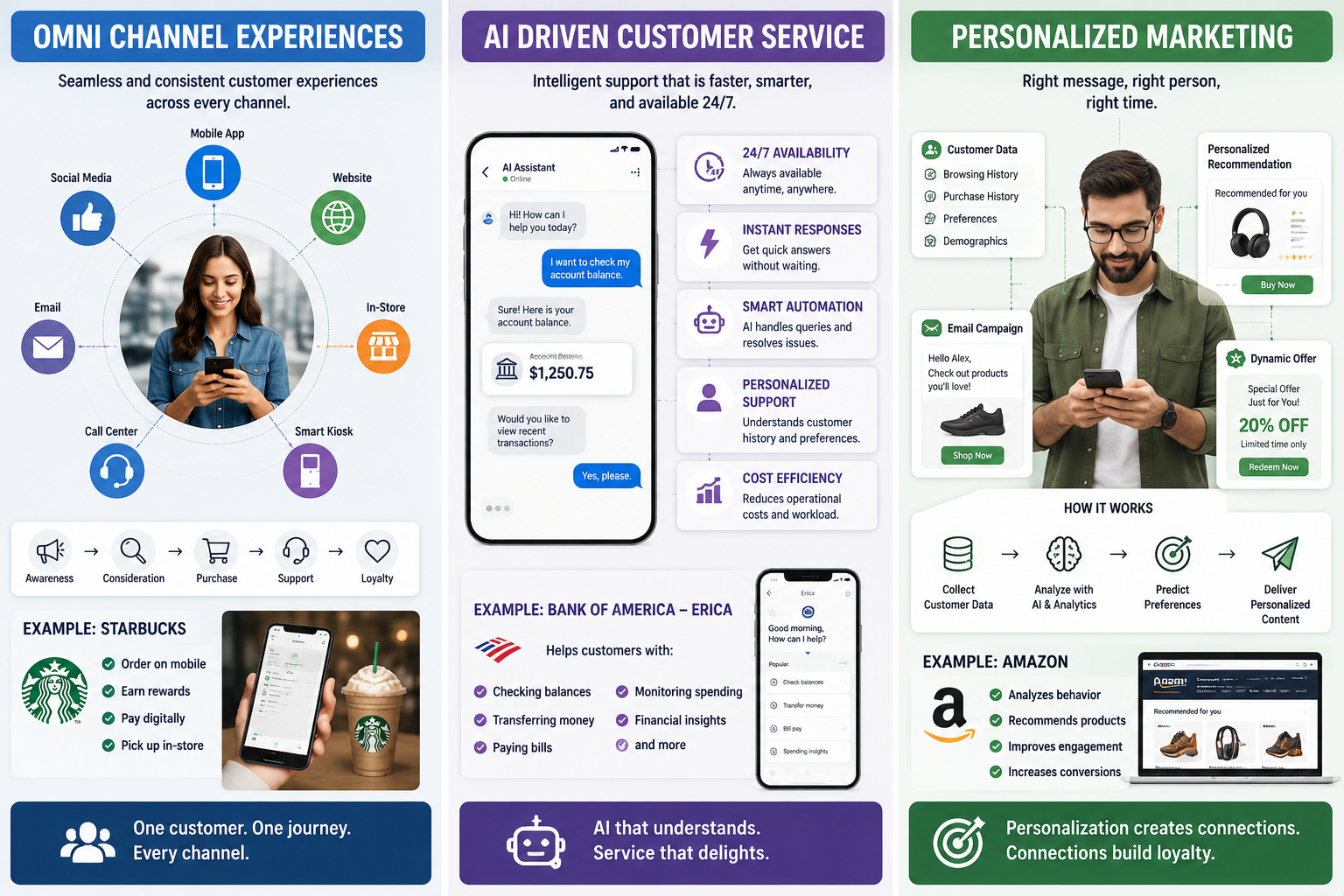
Customer Experience and Digitalization
One of the biggest drivers of digital transformation is the changing expectations of customers. Modern consumers want seamless experiences across online and offline channels. They expect businesses to respond quickly, understand their preferences, and provide personalized services.
As a result, many companies are investing heavily in customer experience digitalization.
Omni-Channel Experiences
Omni-channel strategy focuses on creating a seamless customer experience across multiple platforms such as physical stores, websites, mobile applications, and social media.
A strong real-world example is Starbucks.
Starbucks developed a highly integrated digital ecosystem through its mobile application, loyalty program, and physical stores. Customers can:
- order drinks through the mobile app
- collect loyalty points
- receive personalized offers
- pay digitally
- pick up orders at nearby stores
For example, a customer may place an order through the app while traveling to work, pay digitally, and collect the order without waiting in line.
The Starbucks app also remembers customer preferences and purchase history, making the experience more personalized and convenient.
During busy hours, this system improves customer satisfaction while reducing congestion inside stores.
This example demonstrates how omnichannel strategies combine digital and physical experiences into one connected customer journey.
AI-Driven Customer Service
Artificial Intelligence is transforming customer service through chatbots, virtual assistants, and automated support systems.
One strong example is Bank of America with its AI assistant called Erica.
Erica helps customers perform banking activities such as:
- checking account balances
- monitoring spending
- transferring money
- paying bills
- receiving financial advice
Instead of waiting for human customer service agents, users can quickly access assistance through the mobile application at any time.
The AI system also analyzes customer behavior and provides proactive recommendations. For example, Erica may alert customers about unusual spending patterns or remind them about upcoming bills.
This technology improves response speed while reducing operational pressure on customer service teams.
Another example is airlines using AI chatbots to assist passengers with ticket booking, flight changes, and baggage information during peak travel periods.
Personalized Marketing
Digital transformation allows businesses to use customer data to create highly personalized marketing strategies.
A well-known example is Amazon.
Amazon continuously analyzes customer browsing history, purchasing behavior, search patterns, and product interests. Using AI-powered recommendation systems, Amazon suggests products that match individual customer preferences.
For example, if a customer frequently purchases fitness products, Amazon may recommend sports equipment, health supplements, or workout clothing based on previous activity.
This personalization increases customer engagement and improves sales conversion rates.
Streaming companies such as Spotify also use personalized recommendation systems to suggest songs, playlists, and podcasts based on listening habits.
Personalized marketing demonstrates how data analytics and AI help businesses build stronger relationships with customers.
Automation and Process Optimization
Another major area of digital transformation is automation. Businesses are increasingly using technology to automate repetitive tasks, reduce human error, and improve operational efficiency.
Automation allows employees to focus on higher-value and more strategic activities.
RPA: Robotic Process Automation
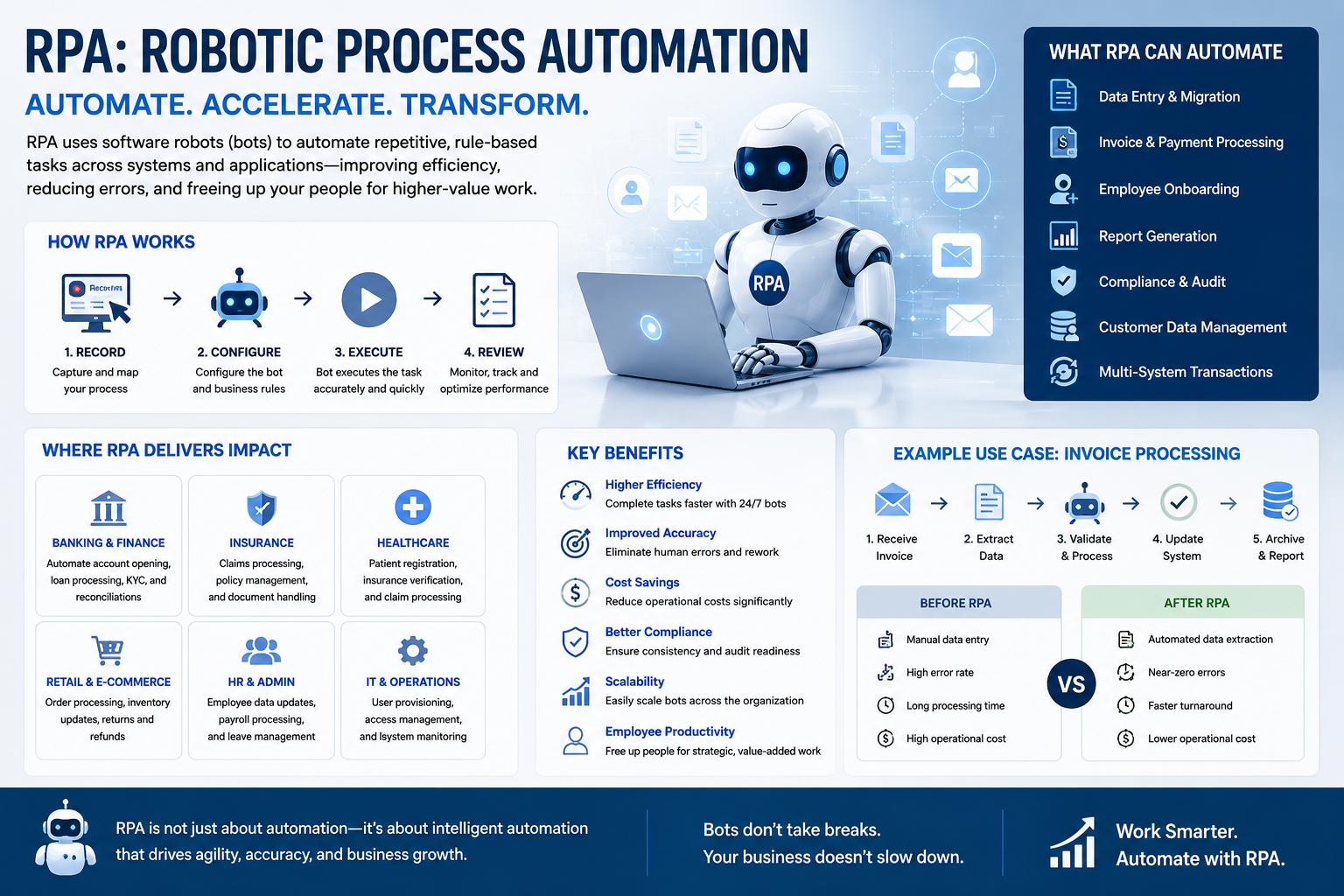
Robotic Process Automation, or RPA, uses software robots to perform repetitive digital tasks that were previously handled manually.
A strong example comes from Walmart.
Walmart uses automation technologies in supply chain management and inventory operations. Software systems monitor inventory levels, track shipments, and automatically process restocking activities.
This reduces delays and improves operational accuracy across thousands of retail stores.
Another major example is UiPath, a company specializing in RPA solutions used by banks, hospitals, insurance companies, and government institutions worldwide.
For example, banks use RPA systems to automate:
- customer onboarding
- document verification
- loan processing
- transaction monitoring
Previously, employees spent hours manually processing documents and entering data into multiple systems. With RPA, many of these tasks can be completed automatically within minutes.
This improves efficiency, reduces operational costs, and minimizes human error.
During periods of high demand, automation also helps organizations scale operations more effectively.
Business Model Innovation
Digital transformation is not only changing operations and customer service. It is also transforming business models themselves.
Many companies are shifting from traditional product-focused businesses into platform-based or subscription-based models.
Subscription-Based Business Models
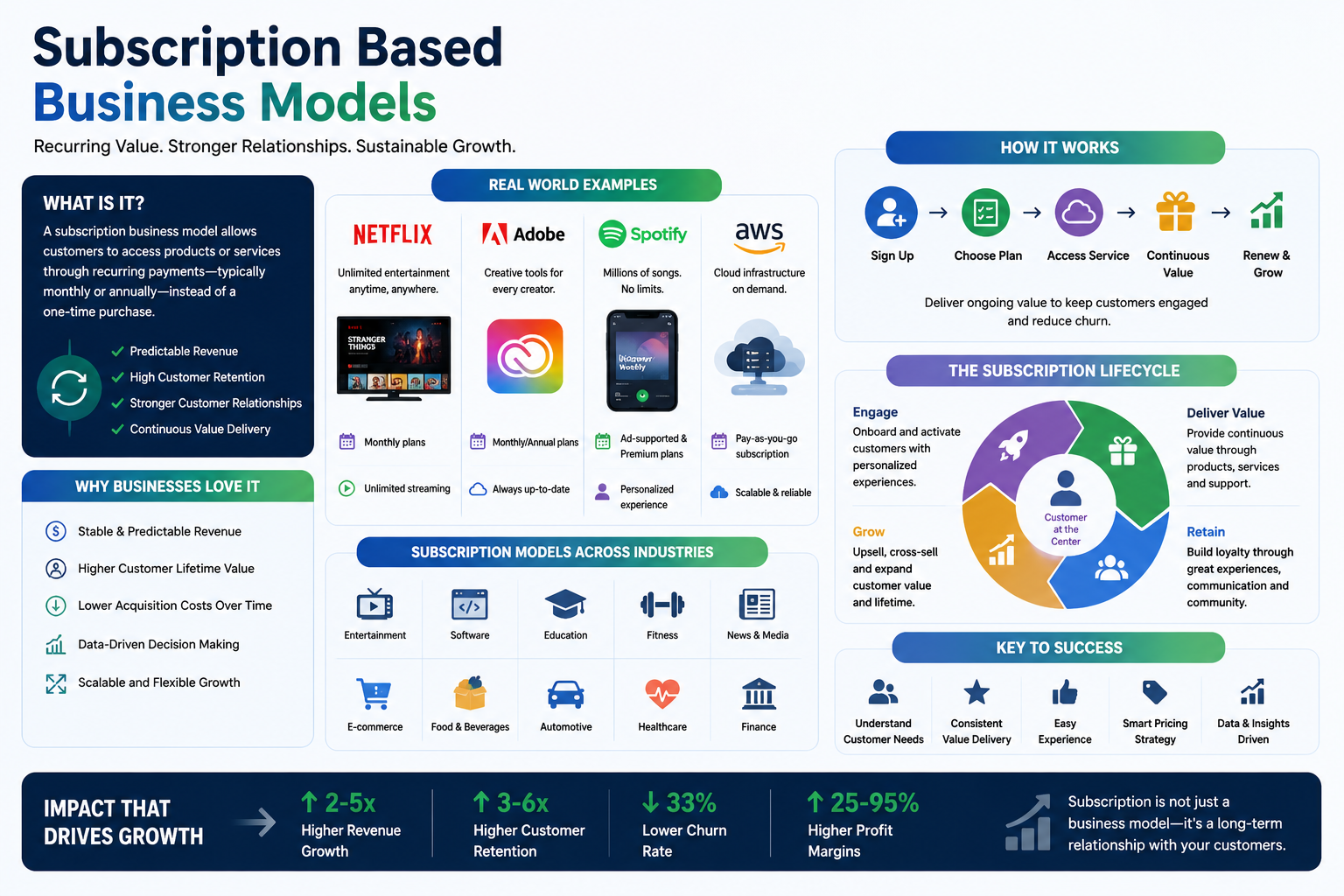
Subscription models provide customers with continuous access to products or services through recurring payments.
One of the strongest examples is Netflix.
Before digital streaming became popular, people typically purchased physical DVDs or paid individually for movie rentals. Netflix transformed this model by offering unlimited streaming through monthly subscriptions.
This business model created predictable recurring revenue while improving customer convenience.
Another major example is Adobe.
Adobe previously sold software products through one-time purchases. Customers bought physical software packages and upgraded occasionally.
However, Adobe shifted to a cloud-based subscription model through Adobe Creative Cloud. Customers now pay monthly or annual subscription fees to access software such as Photoshop and Illustrator.
Initially, some customers resisted the change. However, the subscription model eventually created:
- more stable revenue
- continuous software updates
- stronger customer retention
- improved long-term business growth
Today, subscription-based models are widely used in:
- entertainment
- software
- education
- fitness
- e commerce
- digital services
Platform-Based Business Models
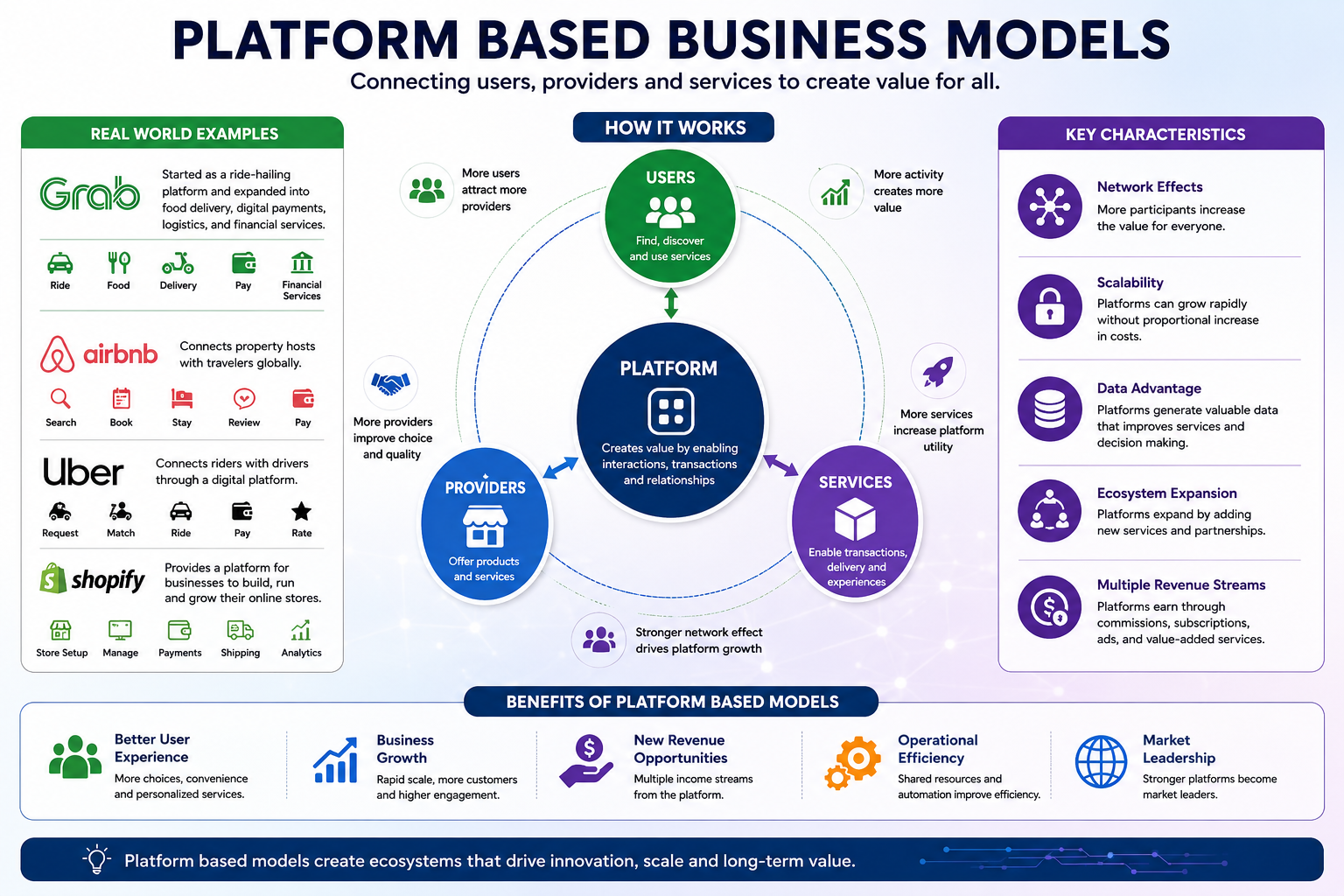
Platform businesses connect users, providers, and services through digital ecosystems.
A major example is Grab in Southeast Asia.
Grab originally started as a ride-hailing platform but later expanded into:
- food delivery
- digital payments
- logistics
- financial services
Instead of owning traditional transportation infrastructure, Grab created a digital platform connecting drivers, merchants, and consumers.
The platform-based model allows rapid scalability because growth depends on expanding network participation rather than building physical assets.
Another example is Airbnb, which transformed the hospitality industry by connecting property owners with travelers through a digital platform.
These companies demonstrate how digital transformation creates entirely new ways of generating value.
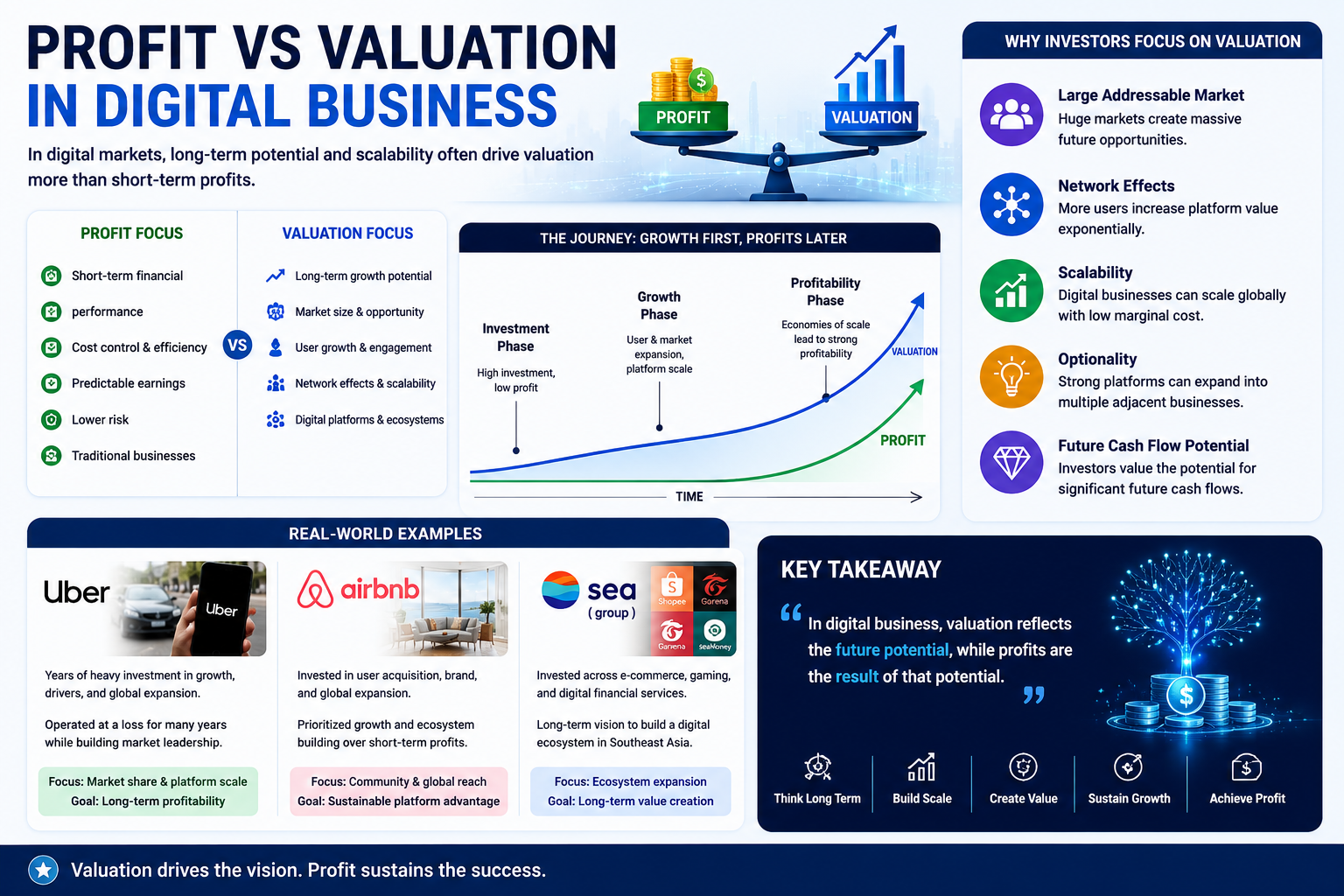
Profit vs Valuation in Digital Business
One interesting aspect of modern digital business is that company valuation sometimes becomes more important than short term profitability during growth stages.
Technology companies often prioritize:
- user growth
- market expansion
- ecosystem development
- customer acquisition
For example, companies like Uber spent years operating with limited profits while aggressively expanding globally and building market dominance.
Investors believed the company’s long-term market potential and platform ecosystem would eventually generate significant value.
Similarly, many startup companies focus heavily on scalability and network growth before achieving stable profitability.
This reflects how digital transformation has changed traditional business thinking. In many digital industries, data, user ecosystems, and platform dominance can become major sources of company value.
Conclusion
Digital transformation is fundamentally reshaping modern business environments. Technologies such as AI, automation, data analytics, cloud computing, and digital platforms are changing how companies interact with customers, optimize operations, and create business value.
The examples above show that successful digital transformation is not simply about adopting technology. It requires businesses to rethink customer experiences, operational processes, and even entire business models.
Companies that successfully embrace digital transformation can improve efficiency, create stronger customer relationships, and remain competitive in increasingly digital markets.
As customer expectations and technologies continue evolving, digital transformation will remain one of the most important strategic priorities for businesses worldwide.