

Digital transformation is no longer just a trend followed by large technology companies. Today, businesses of all sizes are adopting digital technologies to improve efficiency, create better customer experiences, and remain competitive in rapidly changing markets. From retail stores and banks to hospitals and universities, organizations are integrating digital systems into their daily operations.
Several major technology trends are shaping this transformation. These technologies are not only changing how companies operate internally, but also how they interact with customers, analyze information, and make strategic decisions.
Big Data and Analytics
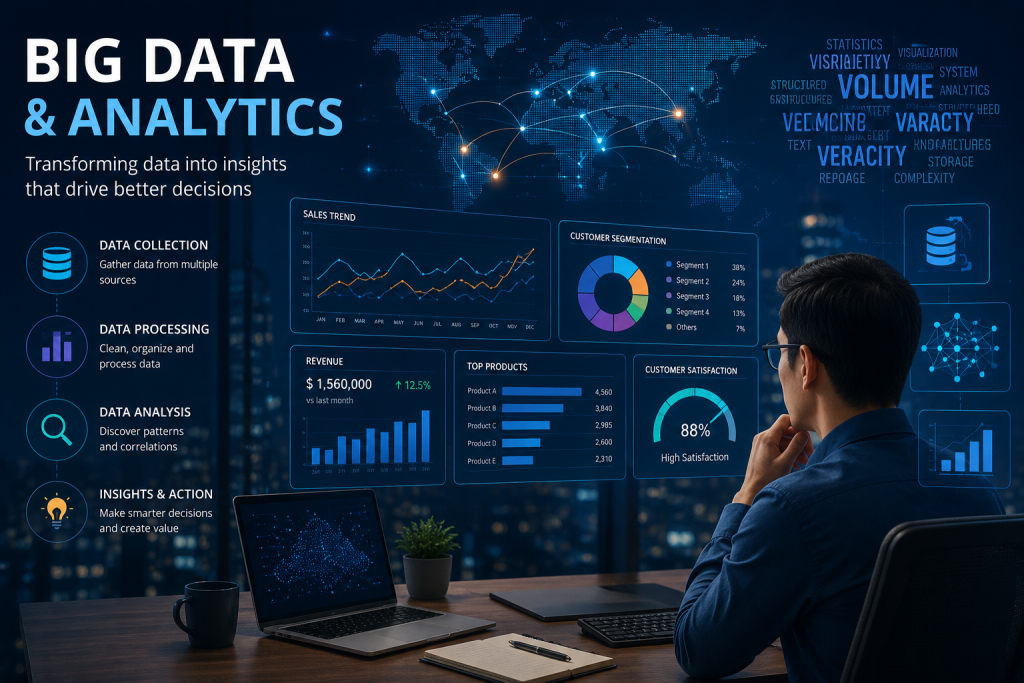
One of the most important drivers of digital transformation is Big Data and Analytics. Every day, businesses generate massive amounts of data from transactions, websites, social media, customer feedback, sensors, and mobile applications. The challenge is no longer collecting data, but understanding and using it effectively.
Big data analytics helps organizations identify patterns, predict customer behavior, and make data driven decisions. Companies can use analytics to improve marketing strategies, optimize operations, reduce costs, and increase customer satisfaction.
A strong example can be seen in Netflix. The company constantly analyzes viewer behavior, including what users watch, how long they watch, what they replay, and what content they search for. Netflix used this data to make strategic decisions about producing original content.
One famous case was the production of House of Cards. Netflix discovered through analytics that viewers were highly interested in political dramas, director David Fincher’s work, and actor Kevin Spacey’s films. Based on these insights, the company invested heavily in the series, which later became a global success.
This example shows how data analytics can reduce uncertainty in decision making and help businesses better understand customer preferences.
AI and Generative AI
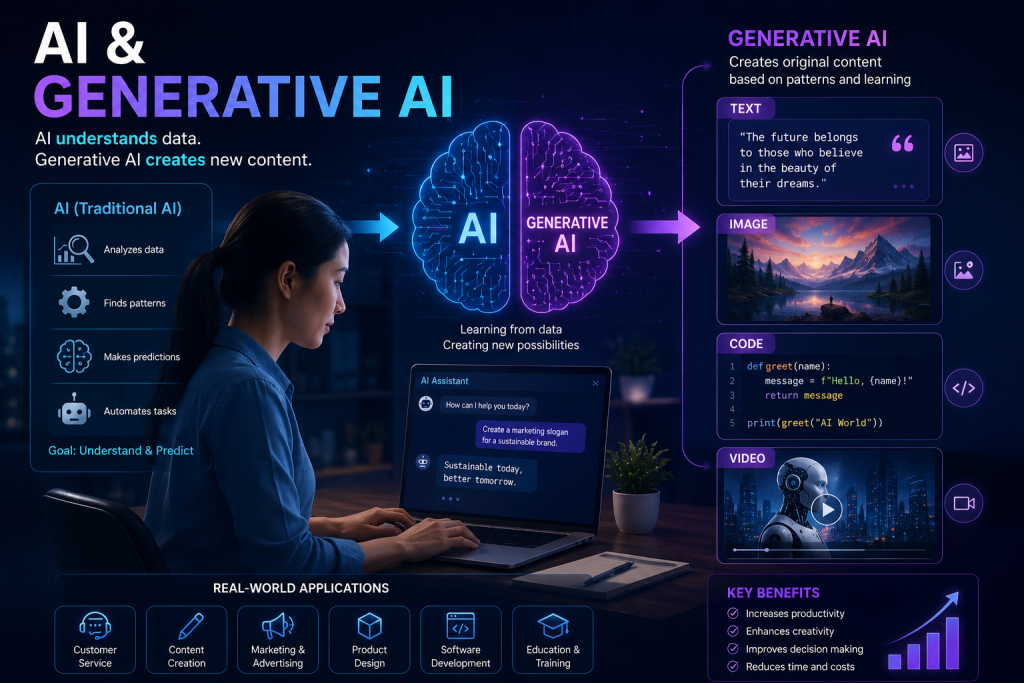
Artificial Intelligence has become one of the fastest growing technologies in digital transformation. AI systems can process large amounts of information, automate repetitive tasks, and support decision making.
Recently, Generative AI has attracted global attention because it can create new content such as text, images, videos, software code, and reports.
A strong example comes from Coca-Cola. The company experimented with Generative AI in marketing campaigns where customers could create AI generated artwork using Coca-Cola themed prompts and templates. The company also used AI tools to accelerate creative advertising production and customer engagement activities.
Another example is Klarna, which implemented AI powered customer service assistants capable of handling large volumes of customer inquiries in multiple languages. The system improved response speed while reducing operational costs.
These examples show that AI is becoming an important business tool for improving productivity, creativity, and customer experience.
AIoT: Artificial Intelligence and Internet of Things
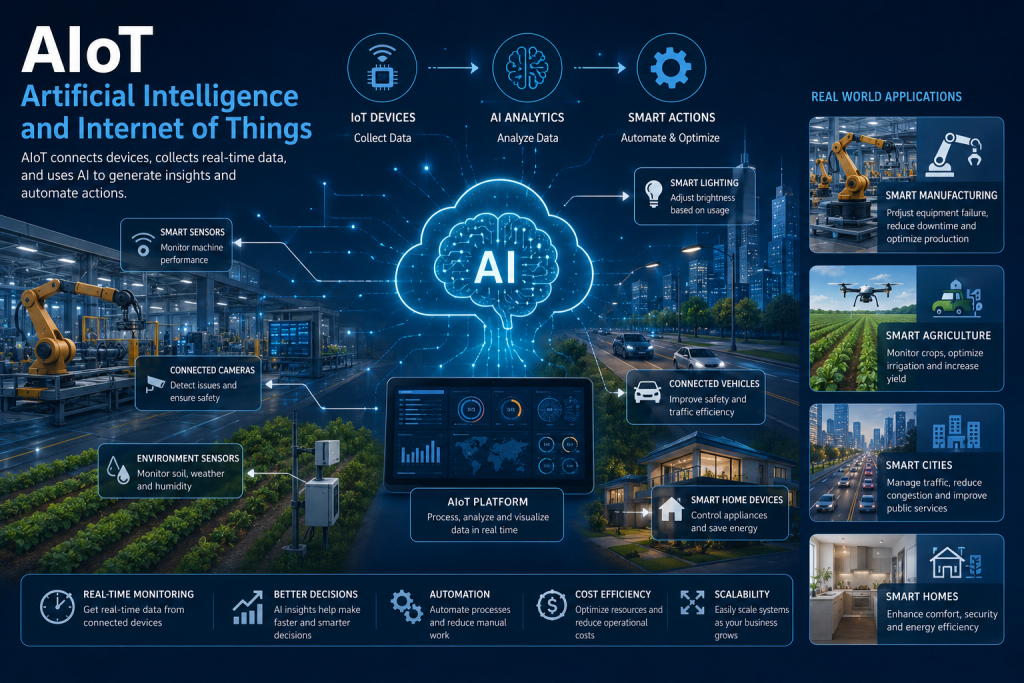
AIoT combines Artificial Intelligence and Internet of Things technologies. IoT devices collect real time data through sensors and connected systems, while AI analyzes the information and automatically responds to situations.
One powerful example can be seen in Tesla. Tesla vehicles continuously collect driving data through cameras, sensors, and onboard systems. AI processes this information to improve autonomous driving features, monitor battery performance, and enhance vehicle safety.
Tesla can even send software updates remotely to improve vehicle performance without requiring customers to visit service centers.
Another example comes from smart manufacturing systems used by Siemens. Sensors installed on factory machines monitor temperature, vibration, and operating conditions. AI systems then predict equipment failures before breakdowns occur, helping companies reduce downtime and maintenance costs.
AIoT is becoming increasingly important because it supports automation, operational efficiency, and real time decision making.
Cloud Computing
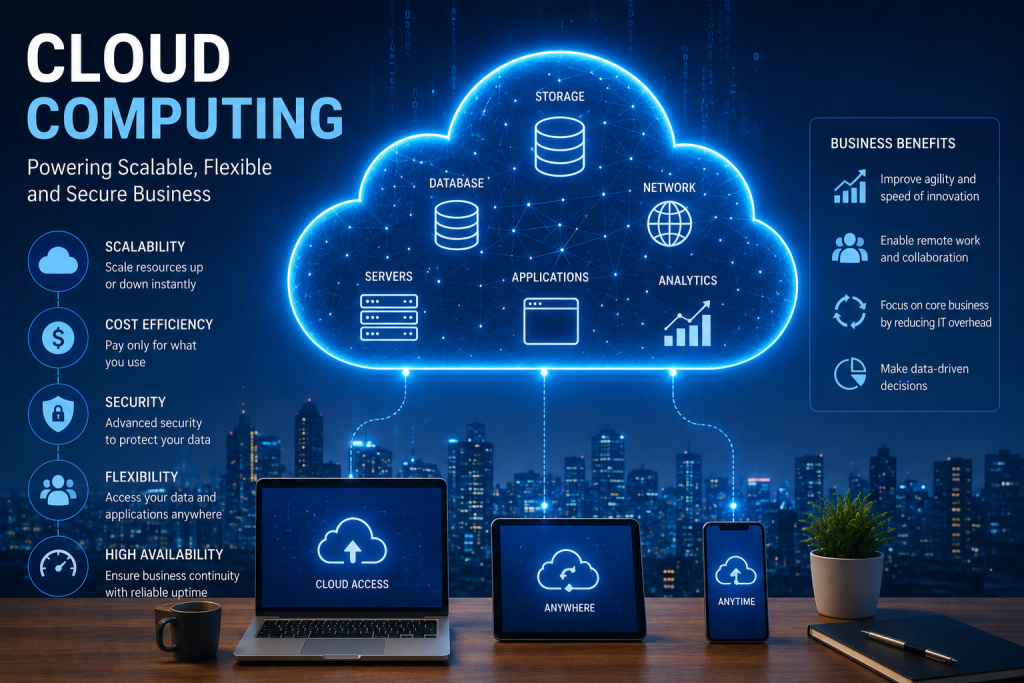
Cloud computing has transformed the way businesses store data and manage digital systems. Instead of depending entirely on physical servers and local infrastructure, organizations can use cloud platforms to access computing resources through the internet.
Cloud computing offers several advantages, including flexibility, scalability, cost efficiency, and support for remote work.
One clear example is Zoom during the COVID-19 pandemic. When millions of people suddenly shifted to remote work and online learning, demand for online meetings increased dramatically.
Because Zoom relied heavily on cloud infrastructure, the company could quickly scale its services and support massive growth in users worldwide.
Another example is Spotify. Spotify migrated much of its infrastructure to cloud services to support global music streaming for millions of users while maintaining system flexibility and performance.
Cloud computing allows organizations to grow quickly without constantly investing in expensive physical infrastructure.
Blockchain
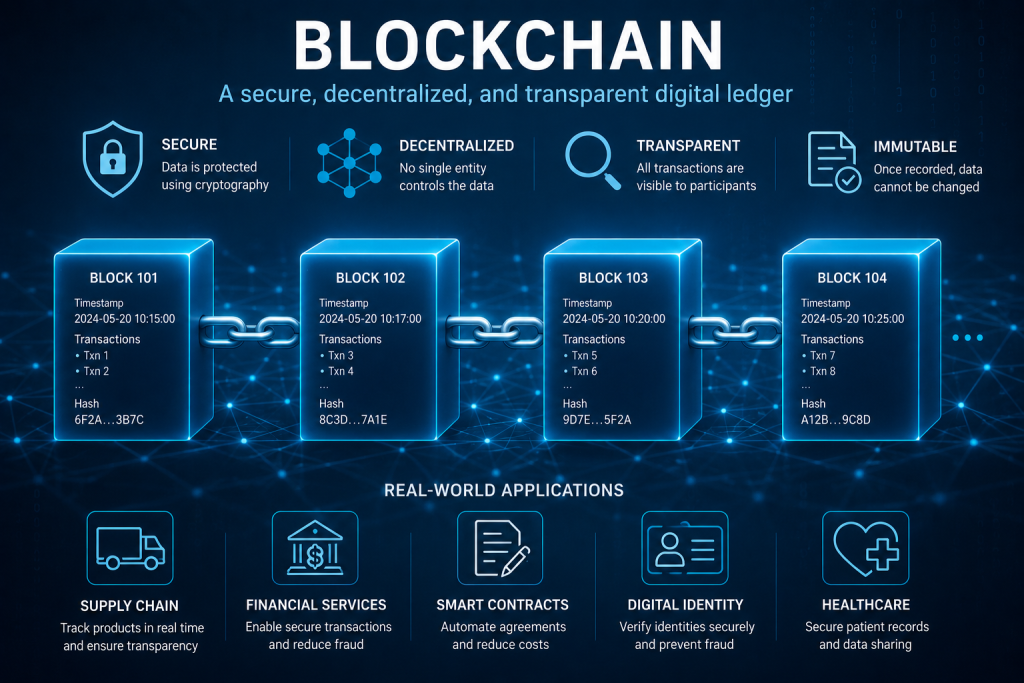
Blockchain is a decentralized digital ledger technology that records transactions securely and transparently. Unlike traditional databases controlled by a central authority, blockchain distributes information across multiple systems, making it difficult to manipulate data.
Although blockchain is widely associated with cryptocurrencies, its applications extend far beyond digital currency.
A strong example can be seen in Walmart. The company implemented blockchain technology to improve food traceability within its supply chain.
Previously, tracing the origin of food products could take several days because information was stored across different disconnected systems. Using blockchain technology, Walmart could trace the source of certain products within seconds.
This became especially important during food contamination incidents because the company could quickly identify affected products and remove them from stores.
Blockchain improves transparency, accountability, and trust in complex business operations.
Cyber Security

As businesses become more digital, cyber security becomes increasingly critical. Organizations now store large amounts of sensitive customer, financial, and operational data online. This creates opportunities for cyber attacks such as hacking, ransomware, phishing, and data breaches.
Cyber security focuses on protecting systems, networks, and information from digital threats.
One major real world example was the ransomware attack against Colonial Pipeline in 2021. Hackers attacked the company’s systems and forced pipeline operations to shut down temporarily.
The incident disrupted fuel supplies across several states in the United States and created panic buying at gas stations. The company reportedly paid millions of dollars to regain access to its systems.
This event demonstrated how cyber attacks can affect not only businesses but also public infrastructure and national economic activities.
As digital transformation continues growing, cyber security is becoming a strategic priority for organizations worldwide.
Quantum Computing
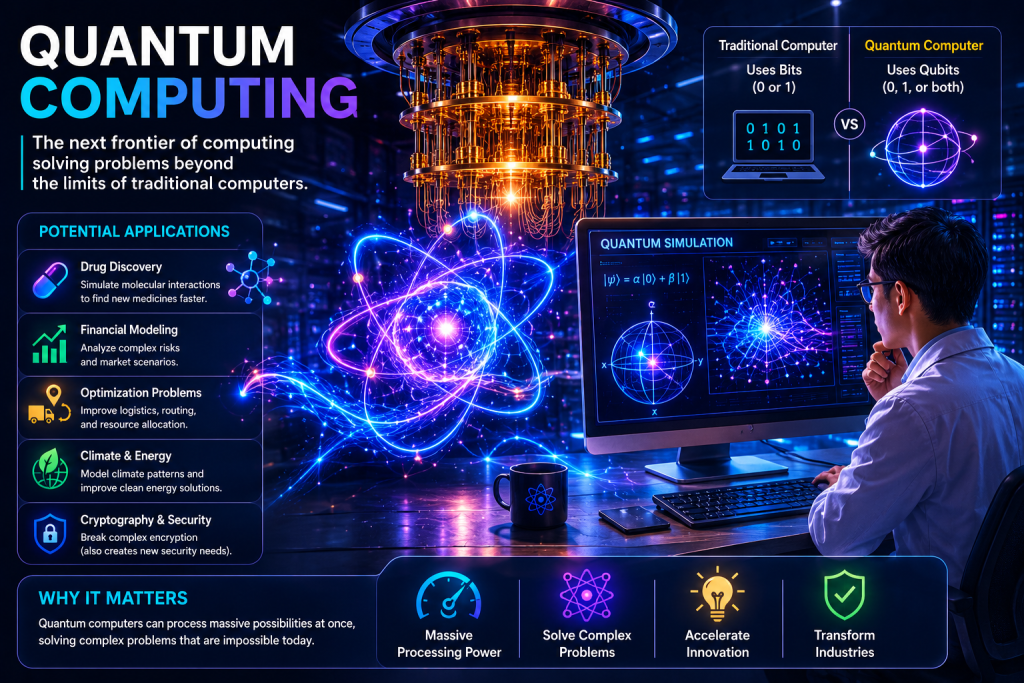
Quantum computing is considered one of the most advanced emerging technologies in digital transformation. Unlike traditional computers that process information using binary bits, quantum computers use qubits, allowing them to process highly complex calculations much faster.
Although still in the early stages of development, quantum computing has the potential to revolutionize industries such as healthcare, logistics, finance, and scientific research.
One leading example is IBM. IBM has invested heavily in quantum computing research and developed cloud accessible quantum computers for researchers and businesses.
Pharmaceutical researchers are exploring how quantum computing could accelerate drug discovery by simulating complex molecular interactions more efficiently than traditional computers.
Financial institutions are also studying how quantum systems may improve risk analysis and investment optimization.
Although practical commercial adoption is still limited, quantum computing is expected to become an important technology in the future digital economy.
Digital transformation is reshaping industries around the world. Technologies such as Big Data and Analytics, AI and Generative AI, AIoT, Cloud Computing, Blockchain, Cyber Security, and Quantum Computing are no longer theoretical concepts. They are already being used by organizations to solve real business problems and improve operational performance.
The examples above show that successful digital transformation is not simply about adopting modern technology. It is about using technology strategically to create value, improve customer experiences, increase efficiency, and remain competitive in rapidly changing markets.
As technology continues evolving, organizations that embrace innovation and continuously develop digital capabilities will be better prepared for long term growth and future business challenges.