
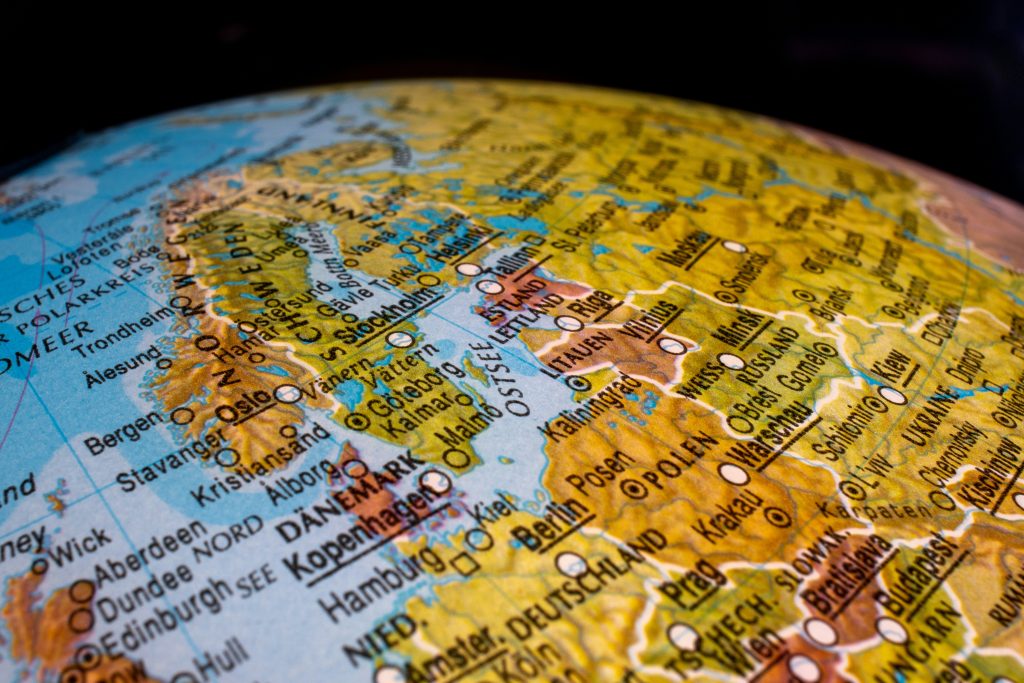
Digital transformation is often associated with technology companies, online businesses, and financial institutions. However, the impact of digital transformation extends far beyond those industries. Governments and agricultural sectors around the world are also adopting advanced digital technologies to improve efficiency, solve complex problems, and provide better services to society.
Technologies such as Artificial Intelligence, Big Data Analytics, Cloud Computing, Internet of Things, Blockchain, and Cyber Security are now being used to modernize public administration and transform traditional farming practices.
These real world examples show how digital transformation is creating practical solutions for governments, farmers, and communities worldwide.
Digital Transformation in Government
Governments manage enormous amounts of information and public services every day. Citizens depend on government systems for healthcare, taxes, transportation, education, business permits, identity documents, and many other essential services.
Traditional government systems are often slow, paper based, and highly bureaucratic. Digital transformation helps governments improve efficiency, transparency, and accessibility.
Estonia: Building One of the World’s Most Digital Governments
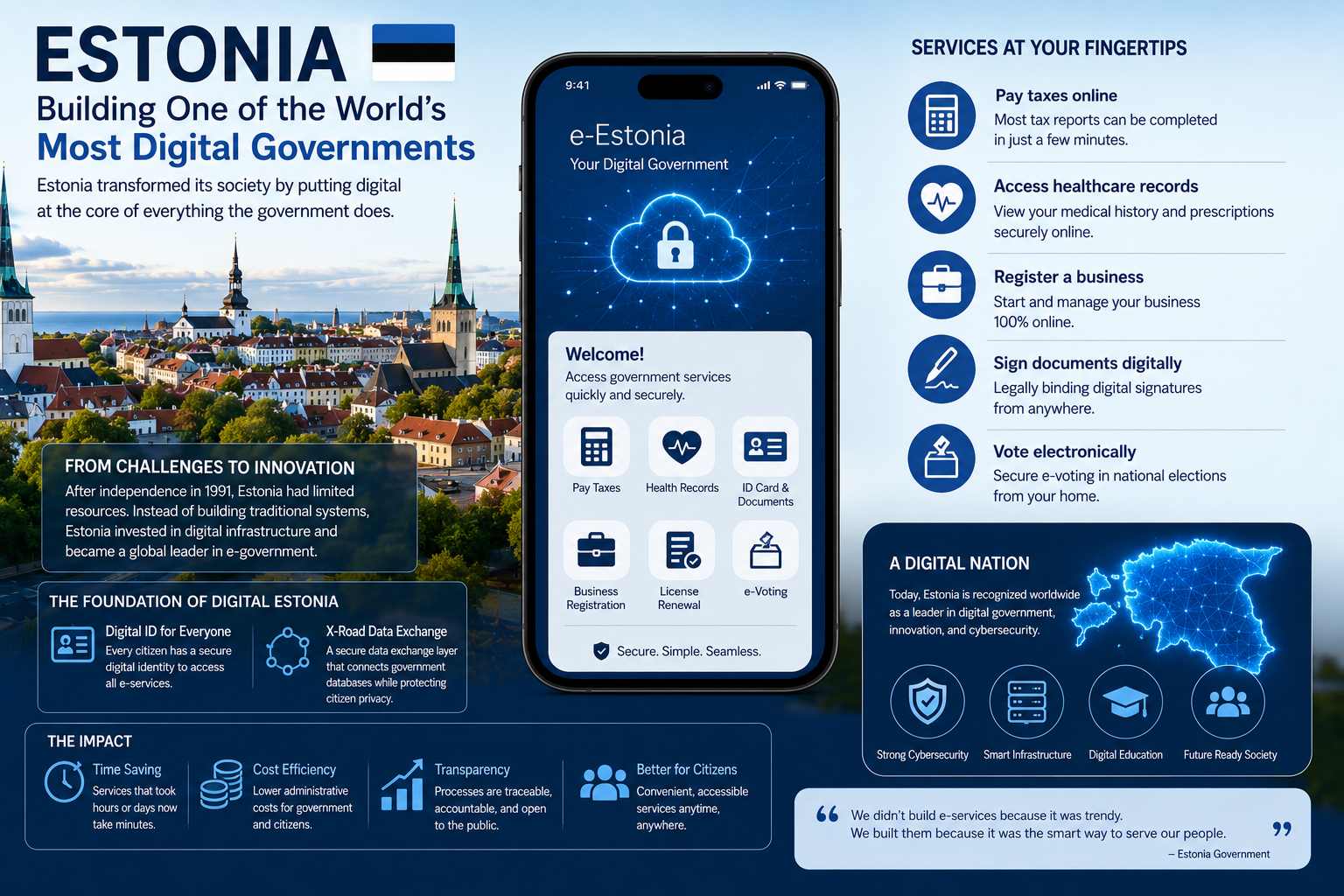
One of the most successful examples of digital transformation in government can be seen in Estonia.
After gaining independence from the Soviet Union in 1991, Estonia faced major economic and administrative challenges. The country had limited financial resources and needed to modernize quickly.
Instead of building expensive traditional bureaucratic systems, Estonia decided to invest heavily in digital infrastructure.
The government introduced a national digital identity system that allows citizens to securely access government services online. Through this system, people can:
- pay taxes online
- renew licenses
- access healthcare records
- register businesses
- sign legal documents digitally
- vote electronically in elections
Most government services can now be completed without visiting physical offices.
One of Estonia’s most impressive achievements is its online tax reporting system. In many countries, tax filing can take hours or even days. In Estonia, most citizens can complete tax reports in just a few minutes because the system automatically integrates financial information from different databases.
The government also developed a secure data sharing infrastructure called X-Road. This platform allows government agencies to exchange information safely and efficiently while protecting citizen privacy.
The impact has been significant:
- government administration became faster
- operational costs decreased
- public service efficiency improved
- business registration became easier
- transparency increased
Today, Estonia is widely recognized as one of the world’s leading digital governments.
Singapore: Smart Nation Initiative
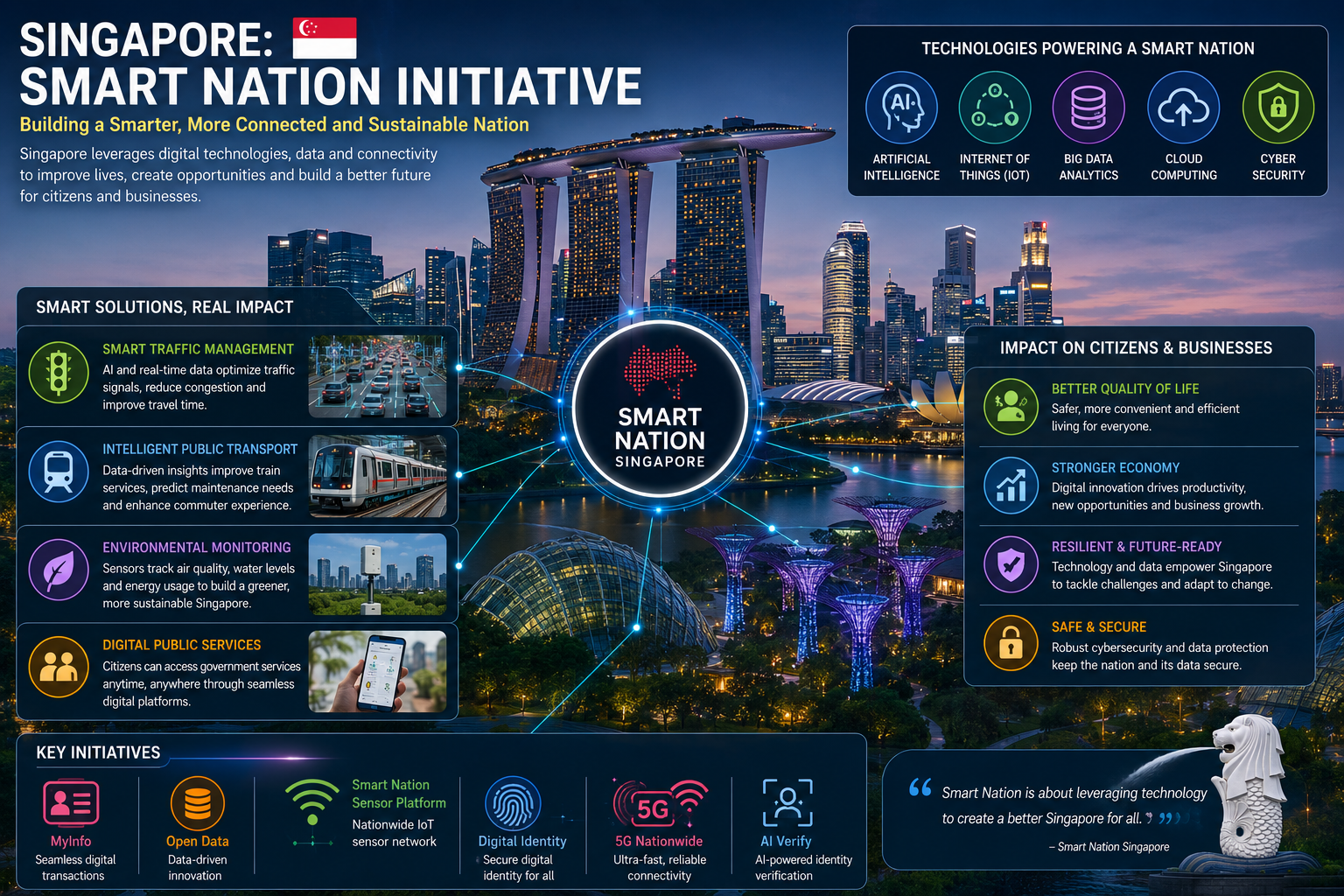
Another powerful example comes from Singapore.
Singapore launched its Smart Nation initiative to improve urban management and public services using digital technologies.
The government implemented sensors, AI systems, data analytics, and IoT devices across the city.
For example, smart traffic systems monitor vehicle movement in real time. AI analyzes traffic conditions and automatically adjusts traffic signals to reduce congestion during peak hours.
Public transportation systems also collect passenger data to improve route planning and operational efficiency.
Singapore uses digital platforms for many public services, allowing citizens to access government applications and information through online systems instead of physical offices.
The government also implemented smart environmental monitoring systems that track air quality, water usage, and energy consumption.
During the COVID-19 pandemic, Singapore used digital contact tracing technologies and data analytics to monitor infection patterns and manage public health responses more efficiently.
This example demonstrates how digital transformation can help governments improve urban living, transportation management, and public safety.
Digital Transformation in Agriculture
Agriculture has traditionally depended on manual labor, experience, and seasonal patterns. However, modern farming is increasingly becoming data-driven and technology-oriented.
Farmers today face many challenges:
- climate change
- rising operational costs
- labor shortages
- water scarcity
- increasing food demand
Digital transformation helps farmers improve productivity, reduce waste, and make better decisions.
John Deere and Precision Agriculture
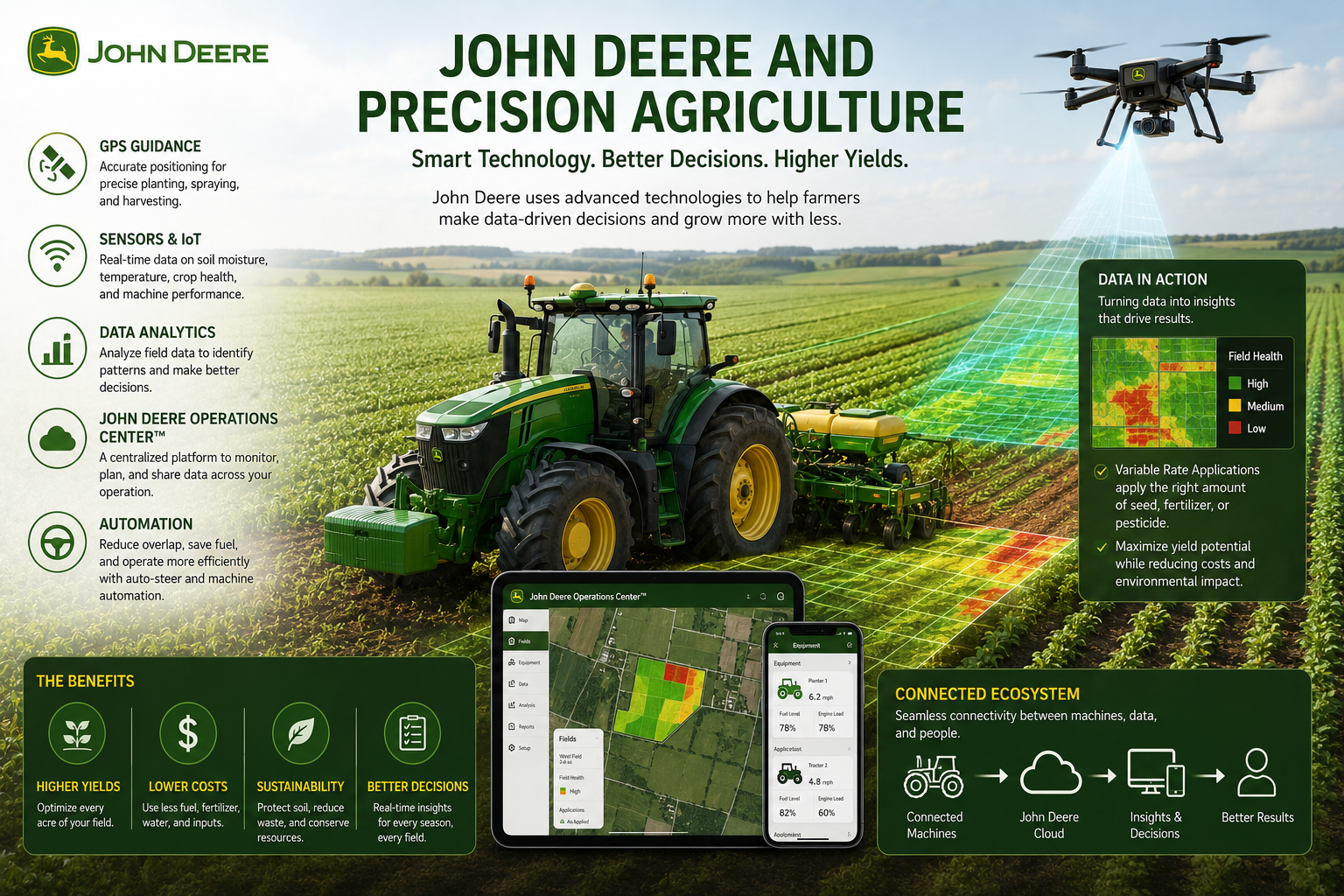
One of the strongest examples of digital transformation in farming comes from John Deere.
John Deere transformed traditional farming equipment into smart connected systems using AI, GPS, sensors, and data analytics.
Modern tractors and farming machines can now collect real time information about:
- soil conditions
- crop health
- fertilizer usage
- fuel consumption
- harvesting efficiency
Farmers use digital dashboards to monitor field conditions and machine performance.
For example, precision agriculture technology allows farmers to identify which areas of farmland need more water or fertilizer. Instead of treating the entire field equally, farmers can apply resources only where necessary.
This approach creates several benefits:
- lower fertilizer costs
- reduced water waste
- improved crop yields
- better environmental sustainability
Some modern farming equipment can even operate semi autonomously using GPS guided systems.
This example shows how farming is evolving from traditional labor intensive practices into technology supported smart agriculture.
Smart Rice Farming in Japan
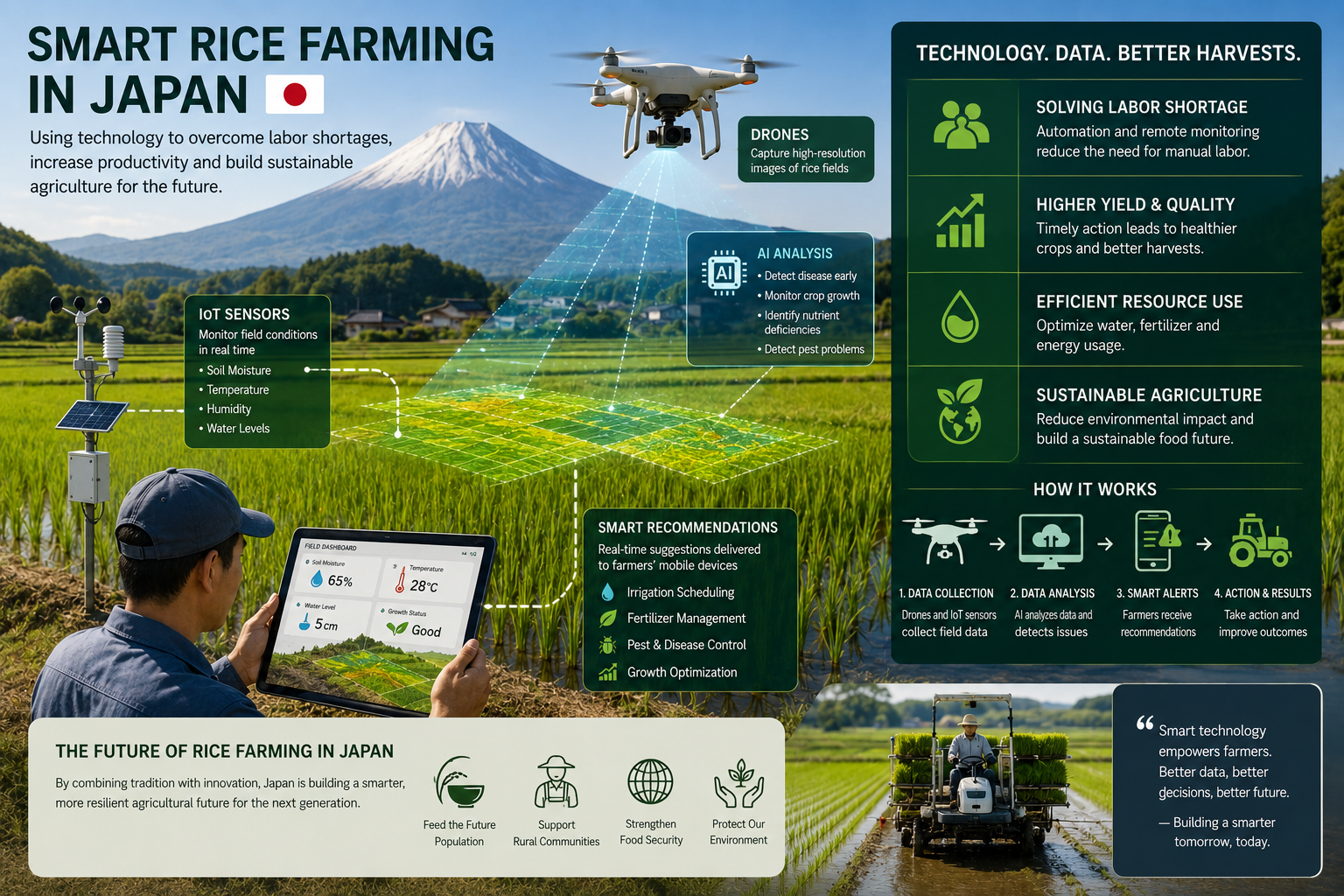
Digital transformation is also helping solve agricultural labor shortages in Japan.
Japan has an aging farming population, and many younger people are moving to cities instead of continuing agricultural work. To address this challenge, Japanese agricultural companies increasingly use drones, AI systems, and IoT sensors in farming operations.
In rice farming, drones fly above fields and capture detailed images of crop conditions. AI systems analyze these images to detect:
- early signs of disease
- water stress
- nutrient deficiencies
- pest problems
Meanwhile, IoT sensors installed in fields continuously monitor:
- soil moisture
- temperature
- humidity
- water levels
Farmers receive real time recommendations through mobile applications about irrigation schedules and fertilizer usage.
This technology allows farmers to react quickly to problems before crop damage becomes severe.
As a result:
- crop quality improves
- labor requirements decrease
- resource usage becomes more efficient
- farming operations become more sustainable
Japan’s example shows how digital transformation can help modernize agriculture even in countries facing demographic and labor challenges.
Digital Farming Platforms in India
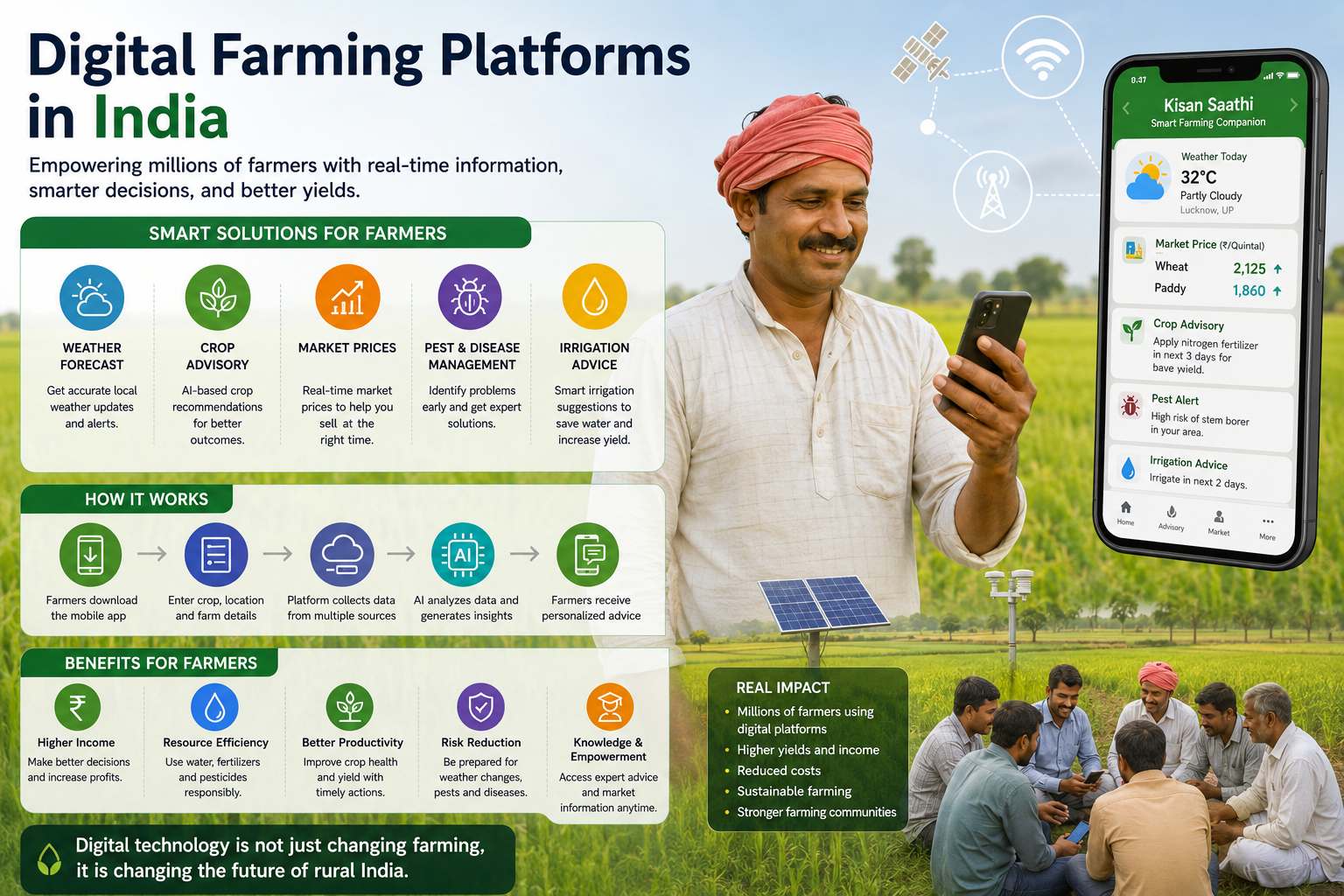
Another important example can be found in India, where agricultural technology platforms are helping millions of small farmers.
Many farmers in rural areas previously relied mainly on personal experience and local knowledge for farming decisions. However, unpredictable weather patterns and market price fluctuations made farming increasingly difficult.
Several agricultural technology companies developed mobile platforms that provide farmers with:
- weather forecasts
- crop recommendations
- market price information
- pest management guidance
- irrigation suggestions
Some systems also use AI based analytics to recommend the best planting schedules and fertilizer strategies.
For example, if weather data predicts heavy rainfall, farmers may delay fertilizer application to avoid waste. If market data shows rising demand for certain crops, farmers can adjust planting decisions accordingly.
These digital platforms help farmers make more informed decisions while improving productivity and reducing financial risk.
This example demonstrates that digital transformation is not limited to large industrial farms. Even small farmers can benefit from accessible digital technologies.
Why These Examples Matter
The examples above show that digital transformation is not simply about using advanced technology. The true purpose is solving real world problems more effectively.
In government:
- digital transformation improves efficiency
- public services become faster
- transparency increases
- citizens gain easier access to services
In agriculture:
- productivity improves
- waste decreases
- sustainability increases
- farmers make better decisions using real time data
Most importantly, these examples show that technology adoption must be connected to practical needs and long term goals.
Organizations and governments that successfully implement digital transformation are usually those that focus not only on technology itself, but also on how technology creates value for people and society.
Digital transformation is reshaping both governments and agricultural sectors around the world. Countries such as Estonia and Singapore demonstrate how digital technologies can modernize public services and improve urban management. Meanwhile, smart farming practices in countries like Japan and India show how AI, IoT, data analytics, and automation are transforming agriculture.
These real world examples prove that digital transformation is no longer optional. It has become an important strategy for improving efficiency, sustainability, competitiveness, and quality of life.
As technology continues evolving, governments and agricultural industries that embrace innovation will be better prepared to face future economic, environmental, and social challenges.